Episode9: The Art of Dressing ━ Inheriting Individuality Through Family and Elegance
Wednesday, November 19th, 2025
Featuring:Angelo Toscano
Director, CFO Lardini Japan
www.linkedin.com/in/angelotoscano/
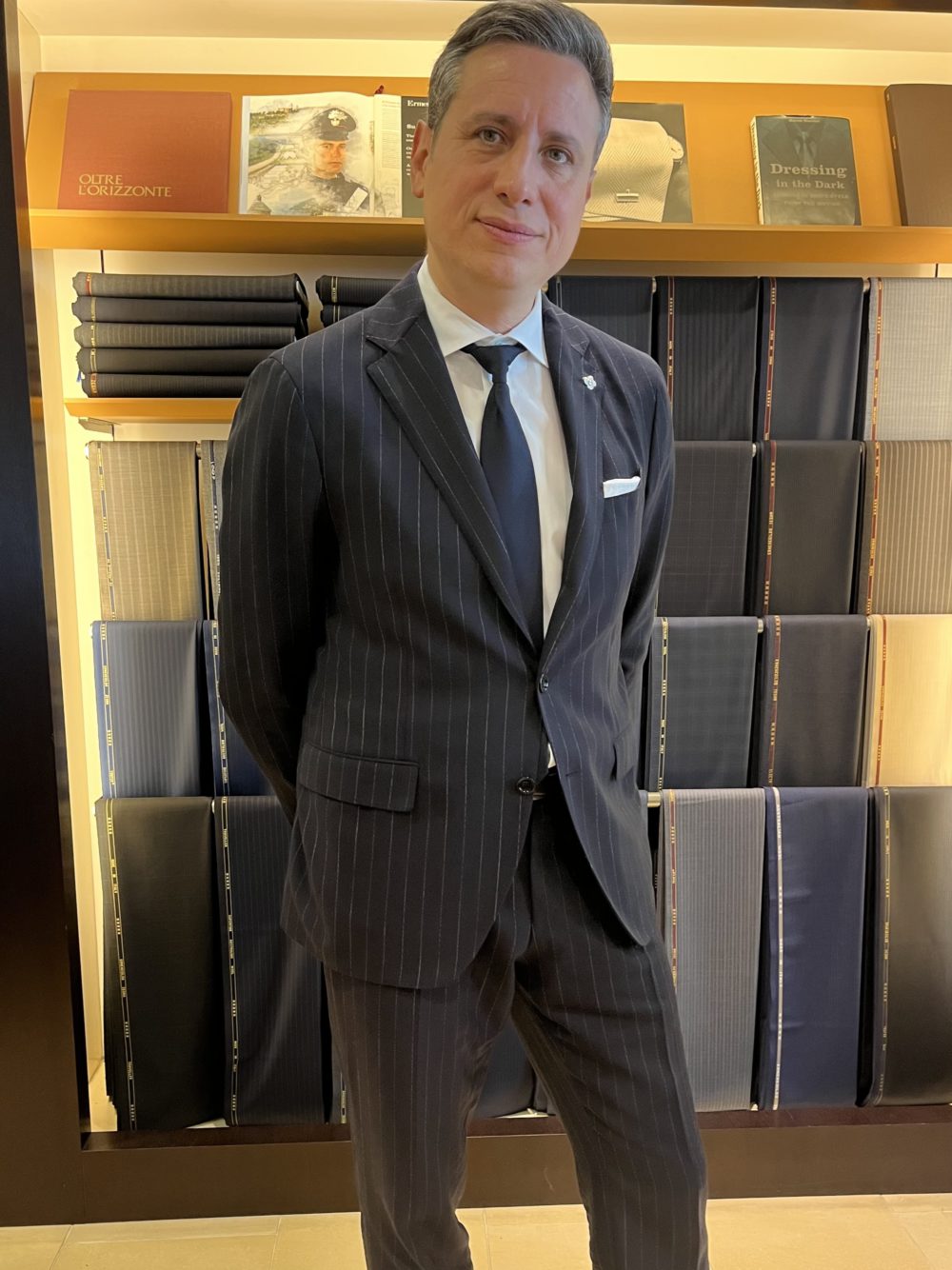
Behind his gentle smile lies a depth shaped by cross-cultural insight and integrity. In his words, gestures, and the way he dresses, one finds a quiet philosophy of respect. Angelo Toscano — a man whose elegance transcends clothing itself.
Angelo Toscano’s career is anything but one-dimensional. He worked for a German industrial company and continues to serve as an advisor to several Italian brands. Moreover, he has been instrumental in bringing Rome’s legendary gelato brand, Giolitti — a personal favourite of mine — to Japan, where he remains actively involved today. When I first met Angelo, Director and CFO of Lardini Japan and long-time advisor to many Italian firms, his presence was exactly what you would expect from an Italian gentleman in the world of tailoring. He wore a perfectly balanced Lardini suit, a discreet pocket square, the brand’s signature flower motif on his lapel, and a Bulgari watch on his wrist. Nothing about his outfit was exaggerated or loud. And yet, it spoke to me quietly and unmistakably: Never forget respect for where you are, and for the person in front of you. For Angelo, who has built his career between Italy, Germany, and Japan, clothing is never a “costume.” It is a language—more eloquent than words. It reflects a person’s sense of beauty, but also serves as a means of conveying consideration toward others. For example, when he meets a Japanese business partner who always wears a suit and tie, Angelo makes a point of dressing to the same level. “That,” he says, “is the clearest way to show respect to the other person.” This single word—respect—is the theme that runs through his life, his way of dressing, and his work.
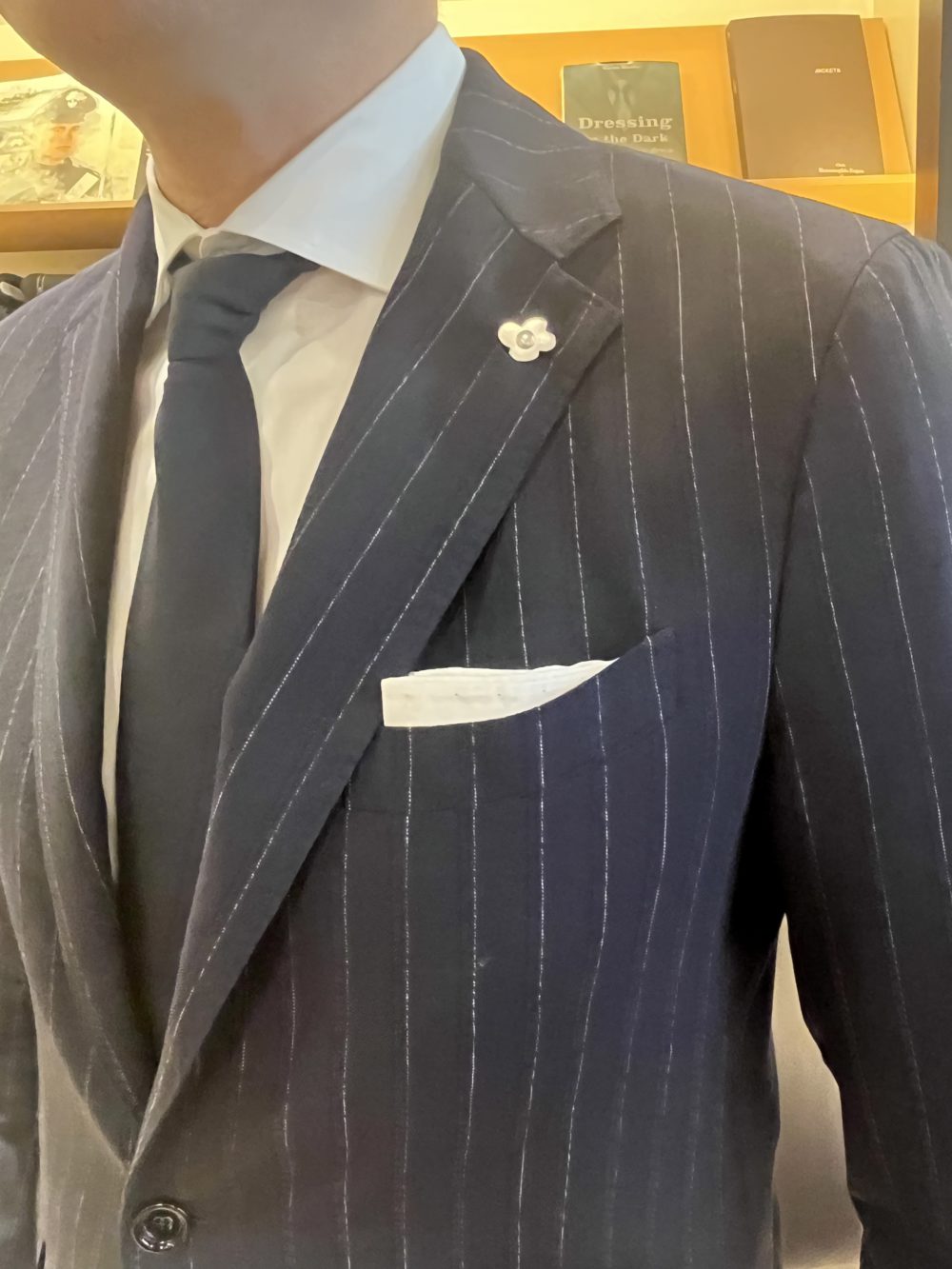
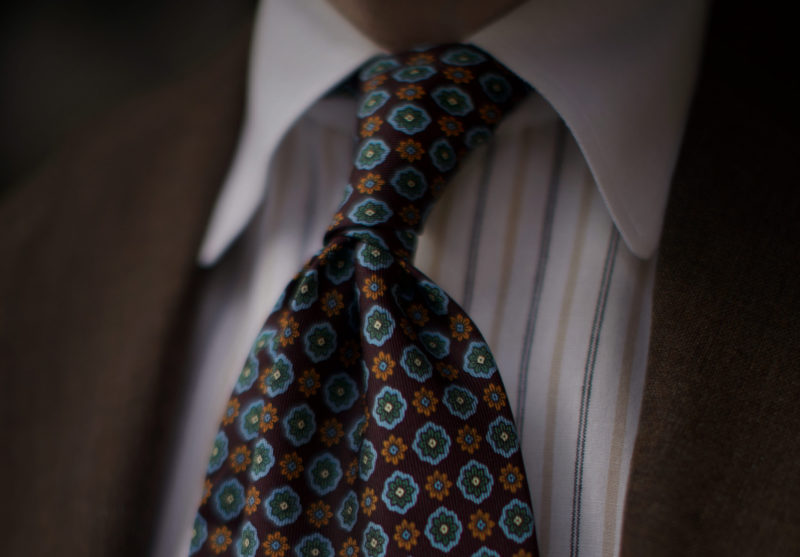
All pieces — the suit, shirt, and tie — are by Lardini. His presence embodies the brand’s philosophy of softly constructed elegance. The quiet refinement that needs no effort comes from a deep respect for clothing and the discipline of everyday life.
Not Just Suits, But Signals
Having moved between different cultures, Angelo understands very well that clothing takes on different meanings depending on country and context. In Italy, to dress is closely tied to expressing one’s individuality and personality. “When we choose what to wear in the morning,” he says, “we ask ourselves: what kind of ‘me’ do I want to be today?” In the United States, on the other hand, clothing is more often a symbol of visible power—a means of signalling status or leadership. In Japan, however, the meaning is slightly different. Suits, shirts and ties have long functioned as the uniform of the salaryman. That is precisely why many young entrepreneurs choose not to wear them. By avoiding the uniform, they express the intention: I do not belong to that category. T-shirts, sneakers and no jacket become a silent declaration that they live in a different cultural frame. As a tailor, I confess that I sometimes feel a certain unease about this trend. Since the pandemic, we have seen a rapid and widespread shift toward extreme casualisation, especially among younger generations. Opportunities to learn where the lines and boundaries of dress should be drawn are gradually disappearing. Angelo shares this view. “In Japan,” he says, “the line between ‘appropriately casual’ and ‘too casual’ has not yet been clearly established.” Because Western dress is not deeply rooted in the culture, Japan is still in the process of discovering those nuances.
Elegance Is Inherited from the Family
When people talk about Italian style, many imagine that Italians are simply born elegant. Angelo laughs at this image, but admits, “It isn’t entirely wrong.” He was born into a Sicilian family, and from an early age he learned that getting dressed was part of everyday manners. His father, now close to eighty, still goes out—except in the height of summer—always in a suit and tie. “Not because anyone tells him to,” Angelo says, “but because that’s what feels like himself. He simply can’t imagine going out without a jacket.” His mother, a primary school teacher, always wore tailored pantsuits. Practical, yet quietly dignified. These everyday scenes became the “genetic code” of Angelo’s aesthetic sense. He recalls: “For instance, I was taught never to wear a boldly patterned shirt and tie with a striped suit. Something has to stay calm. Your eyes need harmony. When everything shouts at once, it becomes tiring to look at.” These are not strict rules, but a sensibility that was passed down naturally. Through Sunday outings, family gatherings, baptisms and other milestones, his family taught him the meaning of dressing for an occasion. “In the past,” he says nostalgically, “even for Sunday mass at church, men in Italy always wore a jacket.” Formality may be fading with time, but the memory of those codes still lives within him.
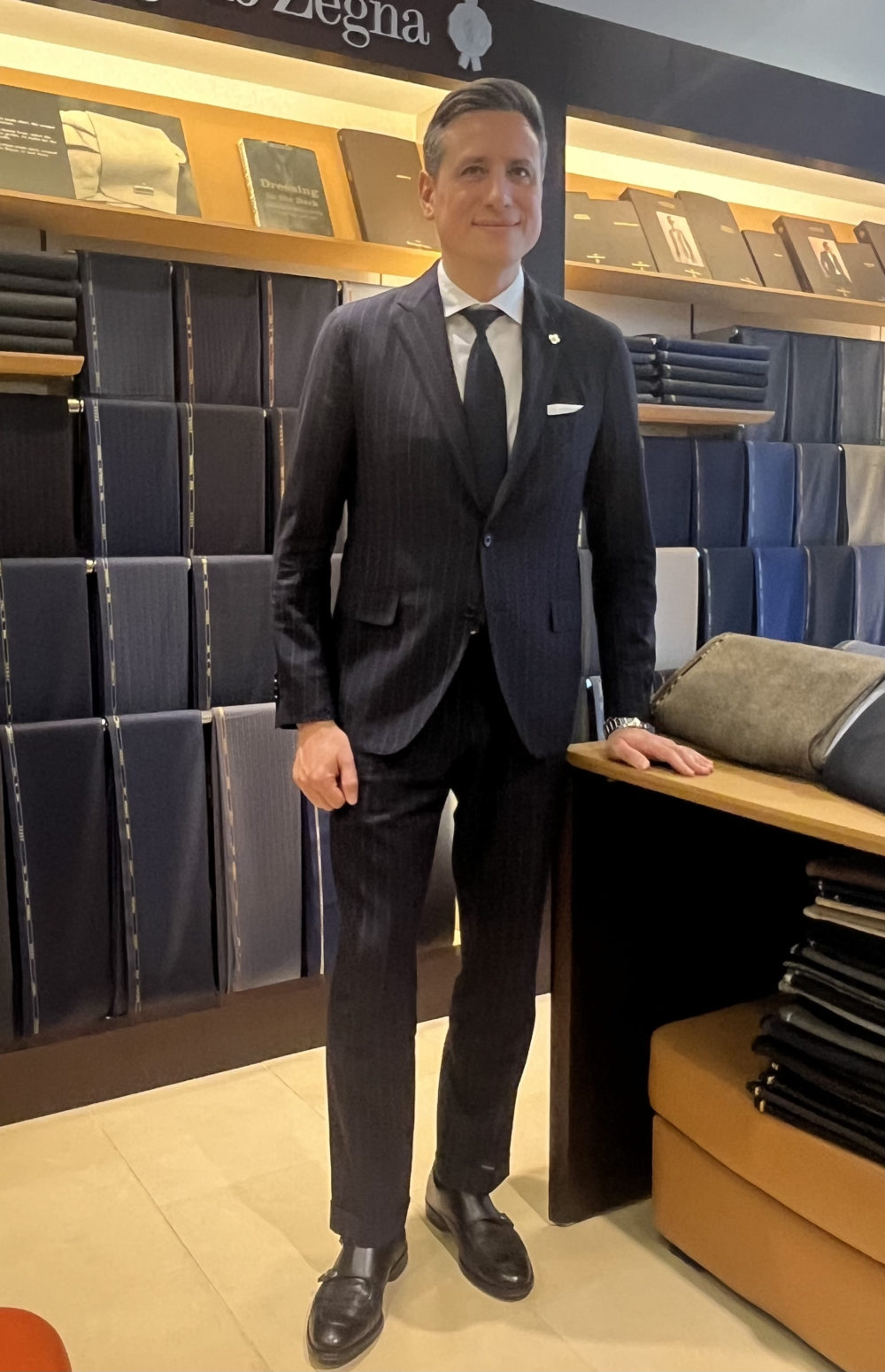
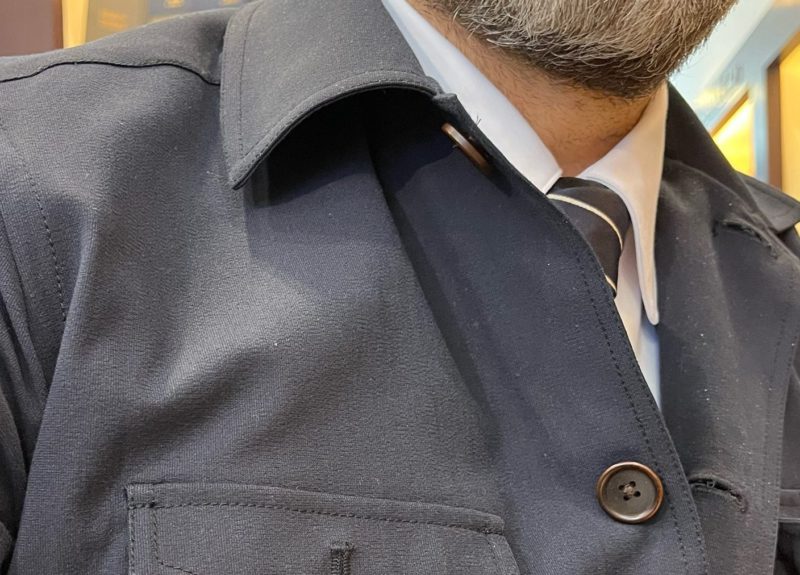
Wearing Lardini’s Spring/Summer 2025 latest striped suit. In keeping with the lesson inherited from his parents — “Pair patterns with solids to create visual harmony” — he completes the look with a crisp white shirt.
Lardini – Between Tradition and Innovation
It is precisely this balance of “timeless dignity” and “modern ease” that Angelo sees as the secret behind Lardini’s appeal. For many years, Lardini has been renowned as a superior factory brand producing suits for some of the world’s most celebrated houses. “Until quite recently,” Angelo notes, “more than half of its sales were from OEM production for other brands.” At the same time, the Lardini label itself has grown into a globally recognised symbol of soft Italian tailoring. At the heart of this identity is the now-iconic flower pin—originally made of felt—that still adorns their lapels today. “It’s just a tiny detail,” he says, “but it made Lardini instantly recognisable. Now the material has evolved into metal and other finishes, but it remains the symbol that says, ‘This is Lardini.’” Another pillar of the brand is its early focus on “comfort.” “Since Covid,” Angelo explains, “men have started to seek both ‘looking proper’ and ‘feeling comfortable.’ The era of stiff, rigid suits is ending.” “What people want now,” he continues, “are suits that are structured yet light and soft—tailoring that works with sneakers. Brands that can deliver that balance are the ones that will survive.” Lardini was one of the first to embody this direction. Unstructured jackets with relaxed shoulders, fabrics that move with the body, and a harmony between shape and lightness—this is what Angelo calls a “reinterpretation of the classic.” The price range sits in the medium-high segment. Not the rarefied world of ultra-luxury maisons, but true elegance designed to live in everyday life. And the people who understand this value best, he says, are the Japanese. “Japan is Lardini’s number one market in the world. There is a culture here that appreciates craftsmanship and enjoys a good jacket as part of daily life—that is Japan’s strength.”
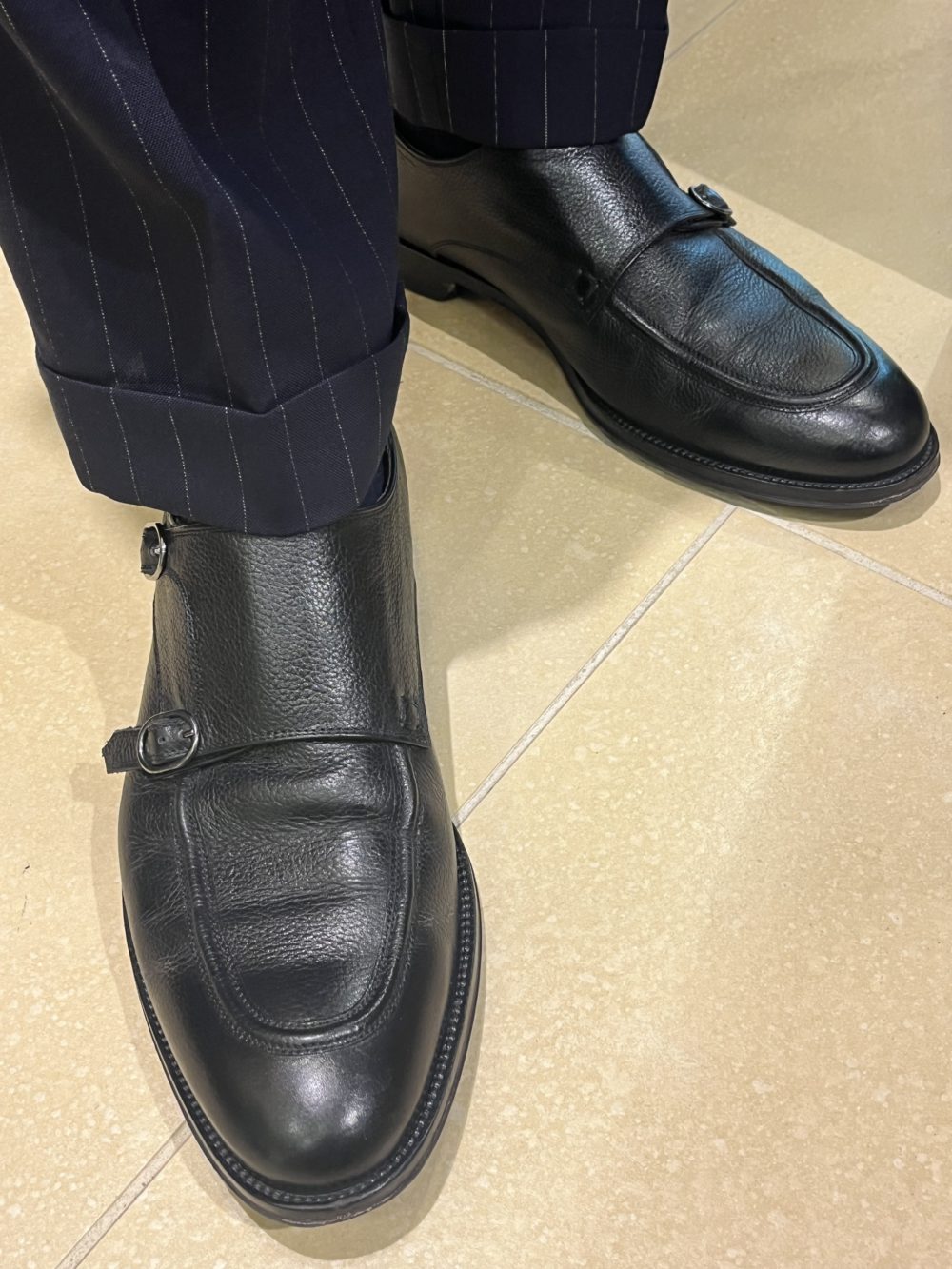
On his feet, a pair of double monk strap shoes by the Italian heritage brand Pollini — a choice that brings a distinct individuality within classic style.
Japan – From Uniform to Choice
What Angelo most emphasises is the high standard of dress among Japanese men. “I genuinely believe Japanese men are among the most elegant in the world,” he says firmly. However, the route to that elegance differs from Italy’s. In Italy, the etiquette of dressing is passed unconsciously from parent to child. In Japan, many men have learned through magazines and information, developing their style in a more theoretical, knowledge-based way. The result is a remarkably high average level of dressing across the board. Yet the strength of the “uniform culture” means that when someone tries to step away from it, they can sometimes swing too far in the opposite direction. “There are young entrepreneurs,” Angelo notes, “who come to important meetings in T-shirts and sweatpants. I understand the desire to express individuality. But I do worry that, without realising it, they may be lacking in respect towards the other party.” He offers one concrete example. “For me, a wedding is a special occasion where you express your congratulations through formal dress. I always wear a tie. It’s not about being conservative; it’s about honouring the significance of the moment.”
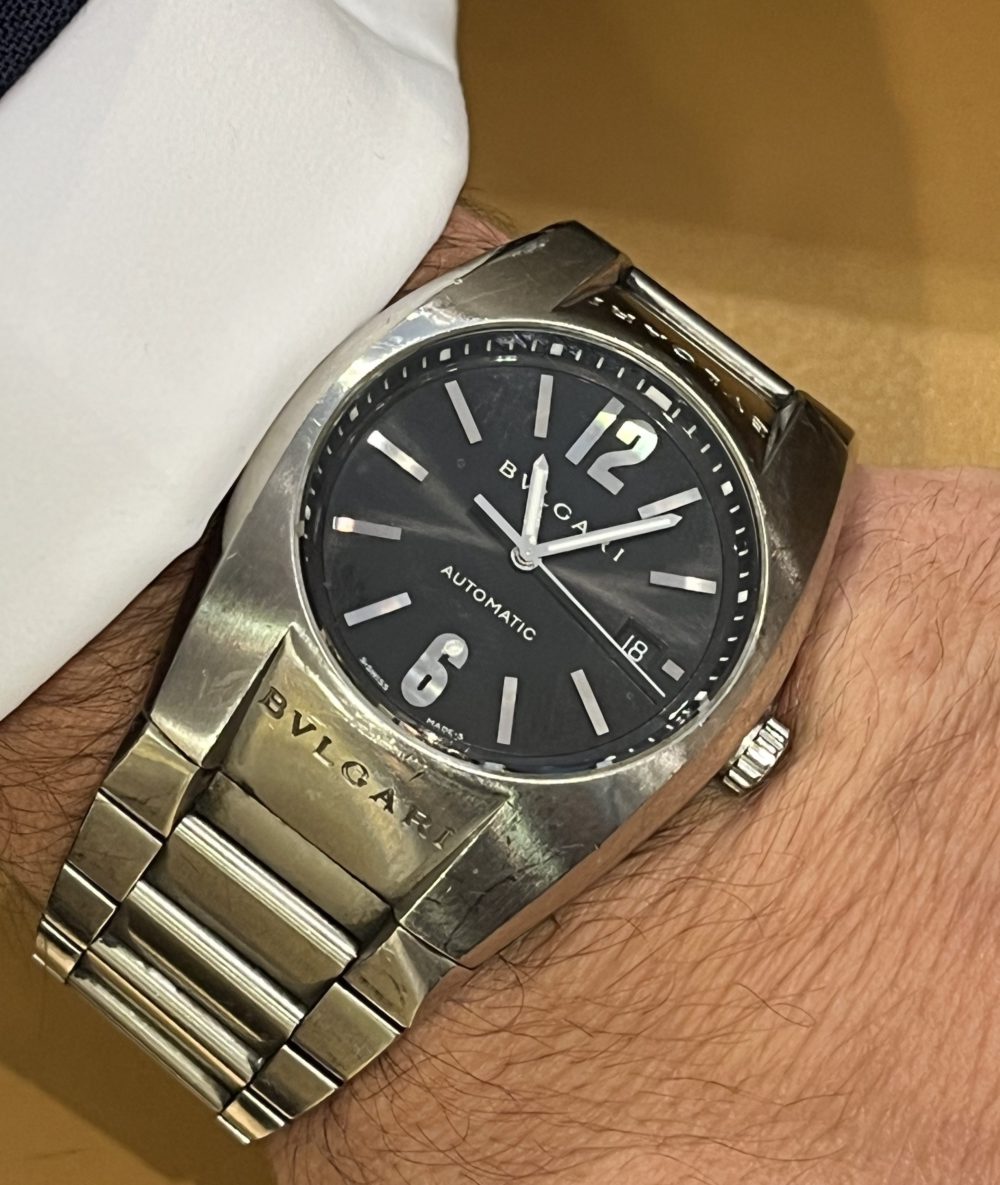
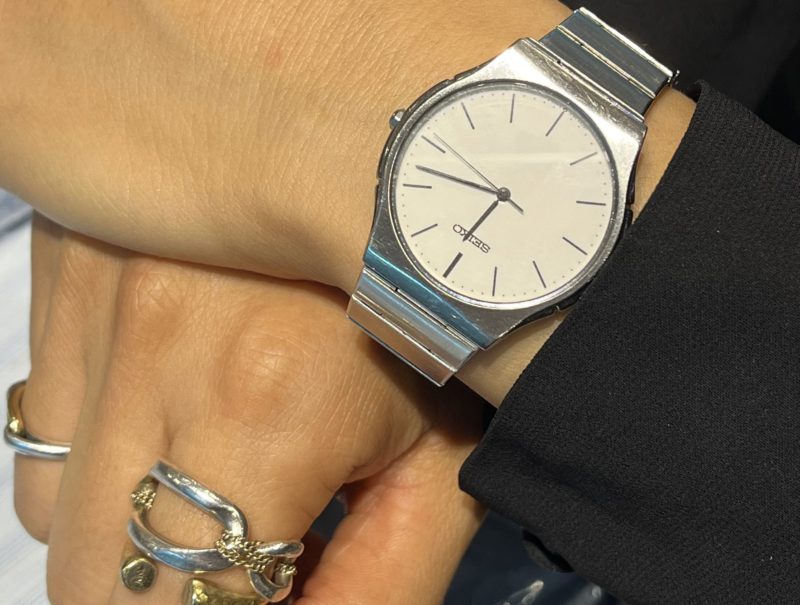
On his wrist, a Bvlgari watch — a gift from his wife. The way he wears it, with evident affection over the years, conveys a sentiment that transcends elegance itself.
The Day One Suit Changed a Life
Anyone who truly believes that “good clothing can change life” has a particular moment that proves it. For Angelo, that moment came on the day of his thesis defense at the prestigious Bocconi University. In Italy, presenting one’s thesis orally before a panel of professors is a deeply traditional ceremony. On that day, he chose a suit and tie more formal than his usual student attire. “The moment I put on the suit, something inside me shifted,” he recalls. “My posture straightened, my voice naturally found a better tone. The clothes gave me confidence. That day, for the first time, I truly felt how powerful clothing can be in changing your state of mind.” It is a simple episode, but it goes straight to the heart of this series. Clothing changes life not by altering the outside world, but by transforming our inner stance toward it.
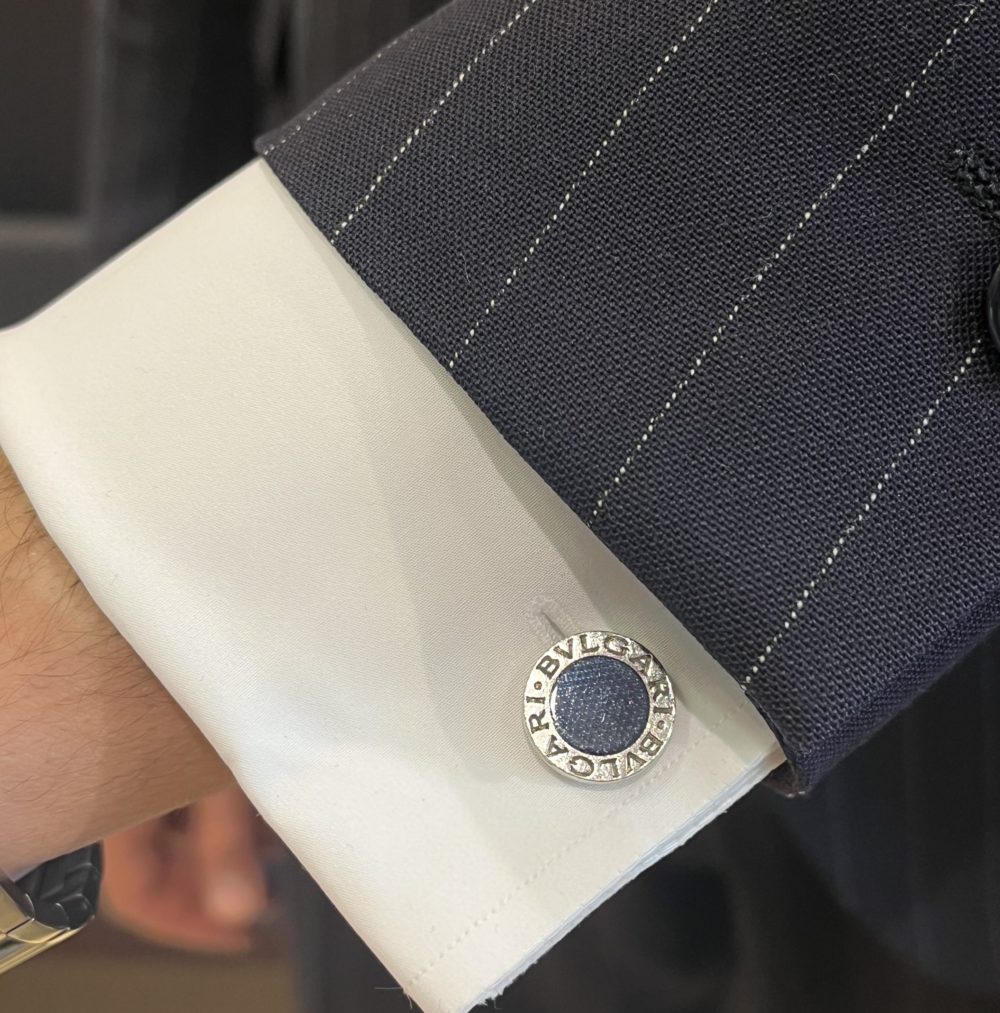
The subtly gleaming cufflinks are also by Bvlgari. His affection for his homeland’s brand, and his choice to wear it on life’s defining occasions — that, too, is his way of expressing respect.
To the Next Generation – The Power of Dressing
At the end of our conversation, I returned once more to the theme of this column. “Do you believe that good clothing can change life?” I asked. “Of course,” Angelo replied without hesitation. “When you dress well, you gain confidence. Your posture improves, you naturally become more conscious of your words and behaviour. People around you sense that. Clothes are a very powerful tool—but they must be used with respect, not arrogance.” To the younger generation working in hoodies and sneakers, he offers a gentle message. “Enjoy casualwear and comfort by all means,” he says. “But know where the boundaries lie. There are moments when a tie is more than just a piece of cloth, and a jacket is more than just another garment. Dressing is not only for yourself—it is an act of respect toward others and toward the occasion.” As Angelo steps out of VESTA at the end of our interview, the Lardini flower on his lapel catches the light. Watching him, I recall the story of his father—an elderly Sicilian gentleman who still walks to the supermarket in a suit and tie. Some may call that old-fashioned. But to me, it looks like exactly what our age needs most: A quiet, understated elegance. And a wordless message that says: Respect yourself. Respect others. Respect the moment.
🎥 Watch the behind-the-scenes short from this interview on YouTube.

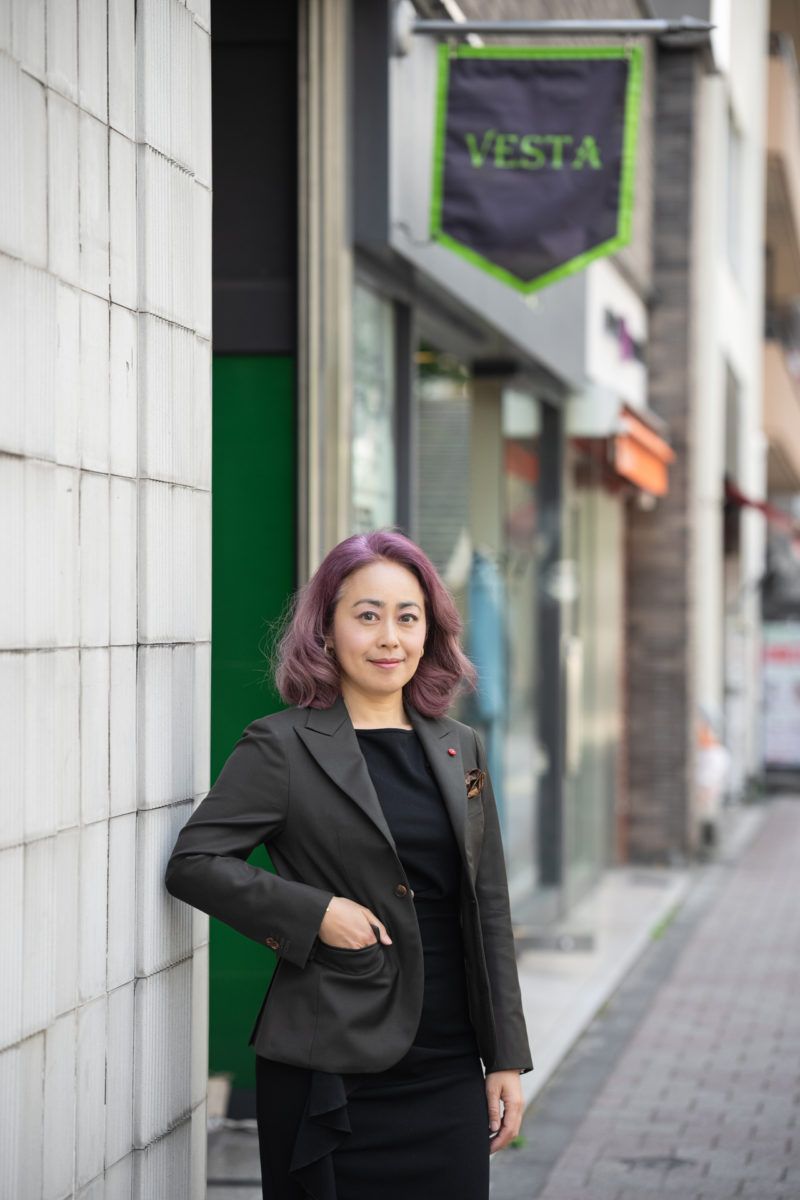
Author: Miyuki Kitagawa
General Manager of VESTA by John Ford, a bespoke tailor in Ginza, Tokyo. Native in Japanese, fluent in English, Italian, and French, she has 25 years of experience as a menswear expert. Known for her exceptional eye for quality fabrics and craftsmanship, she serves a clientele that includes top executives, politicians, and ambassadors worldwide. Even former Italian ambassadors to Japan have praised her work. She frequently contributes to fashion publications and has a deep knowledge of sartorial history. Her favorite food is fugu sashimi (tessa). https://johnford.co.jp/