Episode 13: Attire as a Testament to Preparation and Respect
Thursday, April 30th, 2026
Shunki Kubo
CEO, ABABA Inc.
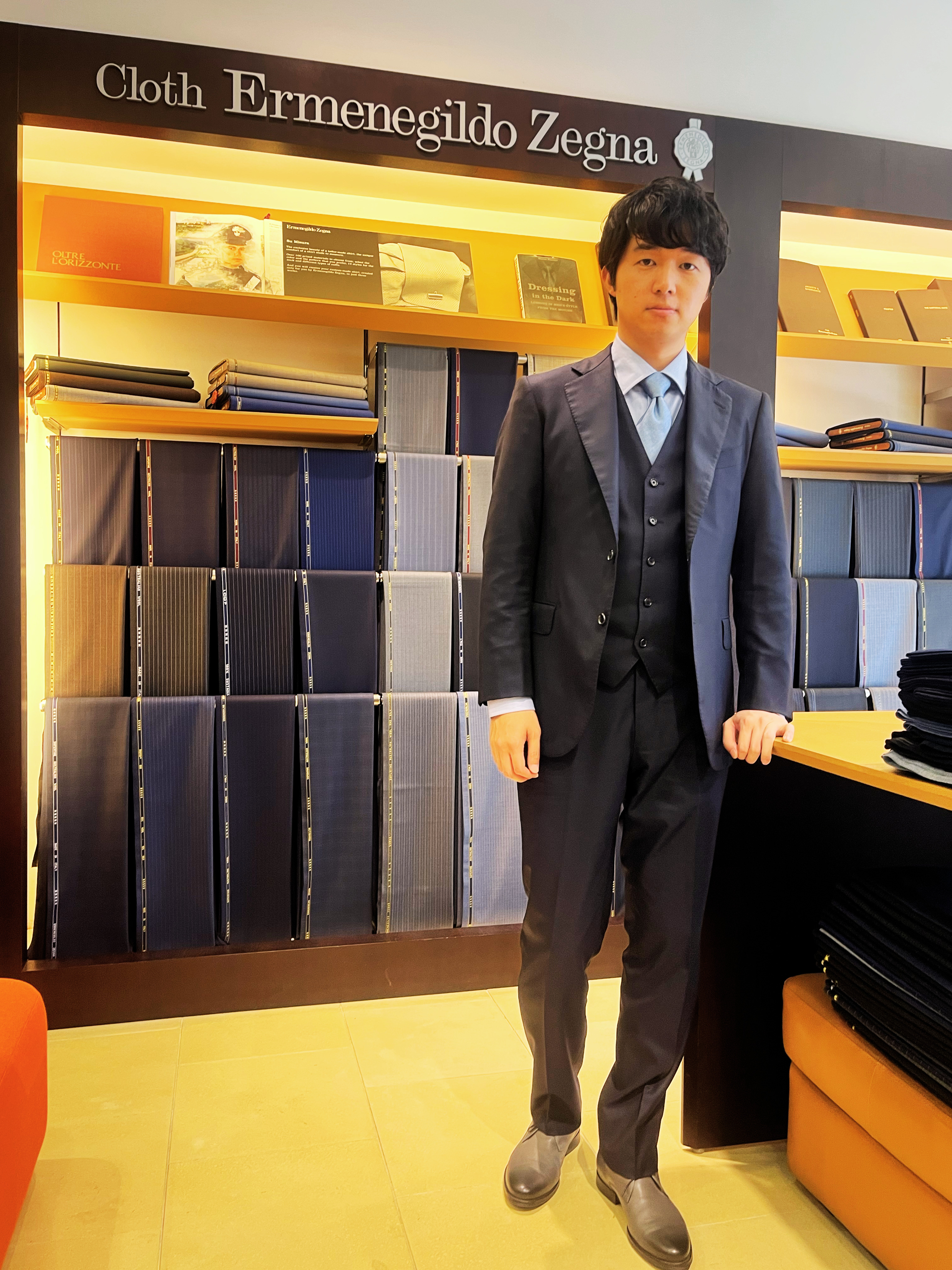
Suit — Authority, Quietly Worn
A navy three-piece tailored by VESTA using Ermenegildo Zegna’s 15milmil15 fabric.
Presented to world leaders at the Turin summit, this fabric represents executive refinement at its highest level.
A quiet sheen and fluid drape create presence without excess—
a suit not to speak, but to be understood.
A Quietly Designed Arrival
Having chosen entrepreneurship from his student years, Shunki Kubo has raised significant capital at a young age and advanced his business as one of the youngest members (at the time) of the Japan Business Federation (Keidanren). He has also been selected for 30 Under 30 by Forbes JAPAN and Forbes Asia—achievements that, at first glance, may appear as a succession of remarkable milestones.
Yet, a closer look reveals something else entirely: not momentum or luck, but a deliberate accumulation of preparation. Even early in his career, he has never treated his youth as a defining label, but rather as something to refine—quietly shaping how he presents himself.
Where he stands, how he is perceived, what he says, and even what he wears—each element is considered in advance. This is not mere “groundwork,” but a strategy rooted in a deep understanding of people and context.
What Being the Youngest Changed
Kubo’s entry into Keidanren was influenced in part by his connection with Tomoko Namba, Chairperson of DeNA, alongside broader changes in the institutional landscape.
What is particularly notable is that his participation became a catalyst, opening the door for younger venture leaders who had previously been distant from such circles.
“I feel that our entry made it easier for other venture founders to participate as well.”
Today, he often receives inquiries from peers asking how they might join. Yet rather than simply sharing a pathway, he asks a more fundamental question—whether one understands how to conduct oneself appropriately in such a setting.
In environments where most executives appear in suits, he notes that overly casual attire is rarely criticized openly, yet it is nonetheless evaluated.
For example, encountering a peer attending a formal economic award ceremony at a prestigious hotel in a T-shirt emblazoned with a company logo can create a subtle sense of discomfort.
It is not a matter of superiority in dress, but of whether one has engaged sincerely with the context and atmosphere of the occasion.
Just as golf courses have dress codes, every setting carries its own sense of decorum.
This awareness forms the foundation of his judgment.
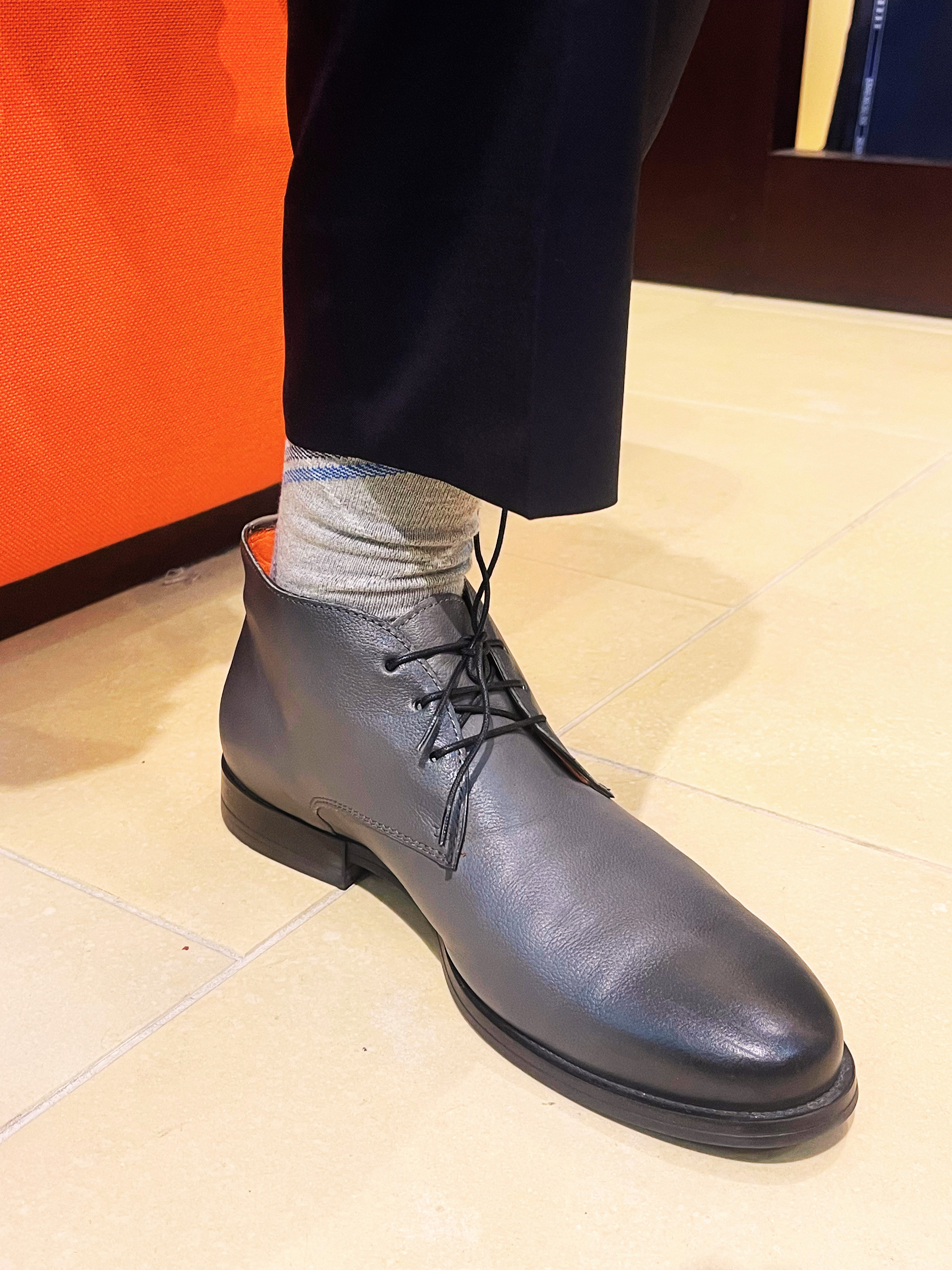
Shoes — Respect in Detail
Santoni Italian boots, chosen as a gesture of respect for a meeting with a senior executive at a major trading company.
A refined silhouette with a subtle grey patina, balancing youthfulness with quiet dignity.
The Origin of “Preparation”
At the core of Kubo’s character lies a consistent instinct—to prepare.
Its roots trace back to his upbringing in Akashi, Hyogo, where his mother, who ran a local English school, repeatedly told him:
“If someone is in need, help them.”
He also reflects on the influence of his hometown, particularly the Egashima community, where he grew up with the same peers from kindergarten through junior high.
“Everyone around me was genuinely kind.”
In that environment, a sense of harmony prevailed over competition.
Even in his early years, he developed an awareness that dressing appropriately was not for display, but for others.
“I was a shaved-head baseball kid, so fashion wasn’t really part of my life,” he says with a smile.
And yet, when launching his business, his first instinct was to personally visit and greet senior figures in his industry.
To acknowledge those who built the market before him, and to position himself accordingly before taking his first step forward.
This was not merely strategy—it was deeply characteristic of who he is.
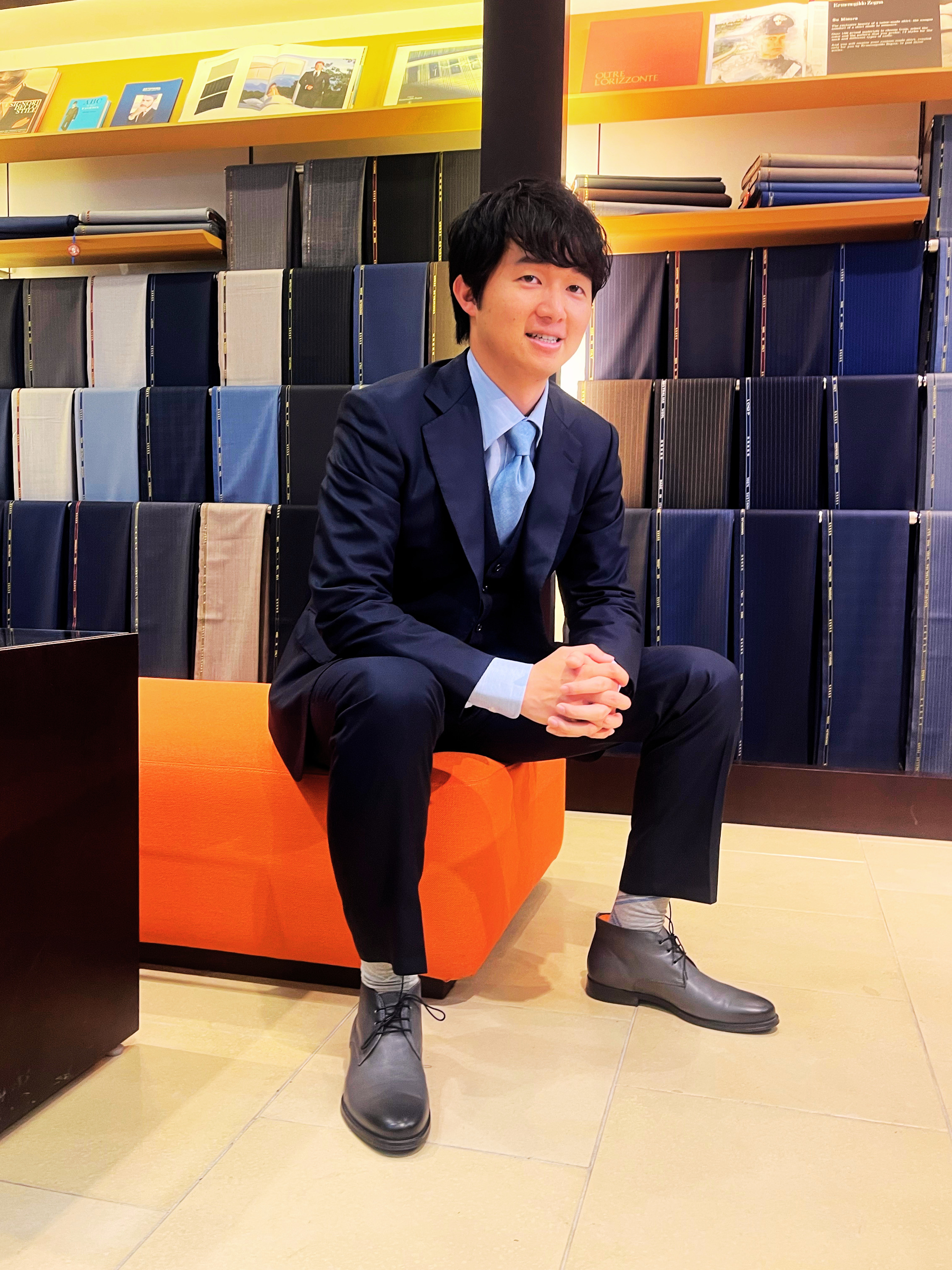
Suit — Authority, Quietly Worn
“I love the feel and comfort. I wear it for almost every important occasion.”
Prepared in advance for this interview, carefully cleaned—
a reminder that small acts of preparation elevate clothing into something akin to armor.
A Suit That Changed Perspective
When he first attended Keidanren, Kubo wore a suit given to him by his family for his university entrance ceremony. It was the same suit he had worn for job hunting.
The turning point came when a senior executive offered a simple piece of advice:
“Why not consider having a better suit made?”
He accepted the suggestion without hesitation—and acted on it. This led him to commission his first suit from VESTA.
Later, another executive advised him on his tie. From there, he began refining every detail—his tie knot, the dimple, even his choice of shoes.
He would even send updates:
“I tried tying it this way today.”
This sincerity—absorbing advice and translating it into action—not only refined his appearance but also deepened his relationships.
A small adjustment can change what one sees.
And that change extends far beyond clothing, into human connection itself.
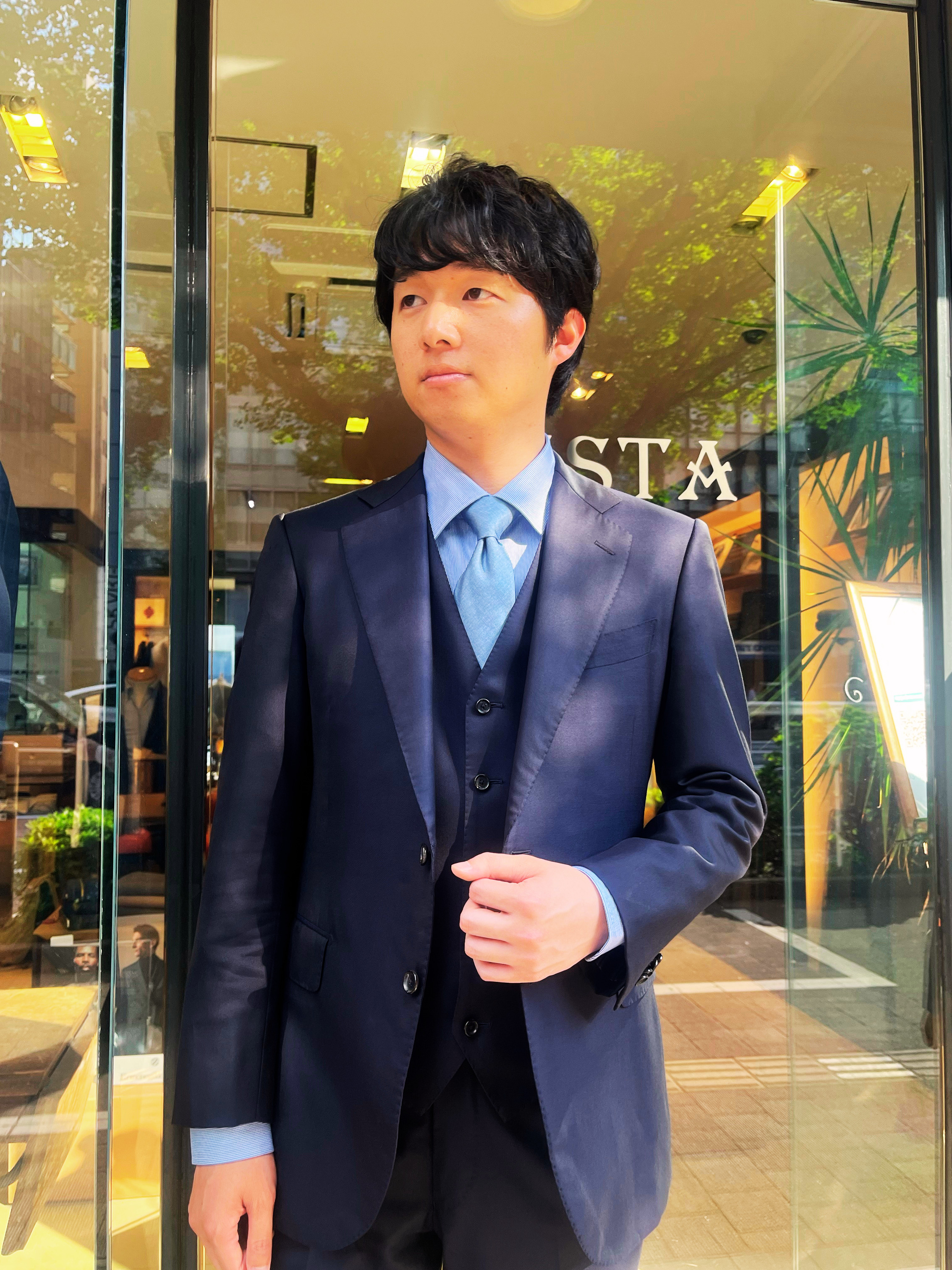
Tie & Shirt — Youth with Intention
Blue tie and shirt, balancing clarity and composure while expressing generational identity with restraint.
Preparation Designs Opportunity
On one occasion, before meeting a senior HR executive at a major trading company, Kubo was advised:
“If you’re meeting them, you should wear what they deal in.”
He followed this precisely, dressing entirely in brands associated with the company.
Likewise, when meeting one of Japan’s leading business figures for the first time, he meticulously prepared—mapping out movement, timing, and conversation topics.
To prepare that thoroughly for just a few seconds of conversation.
That is not coincidence, but intention made visible.
Attire, in this sense, becomes the most immediate expression of preparation.
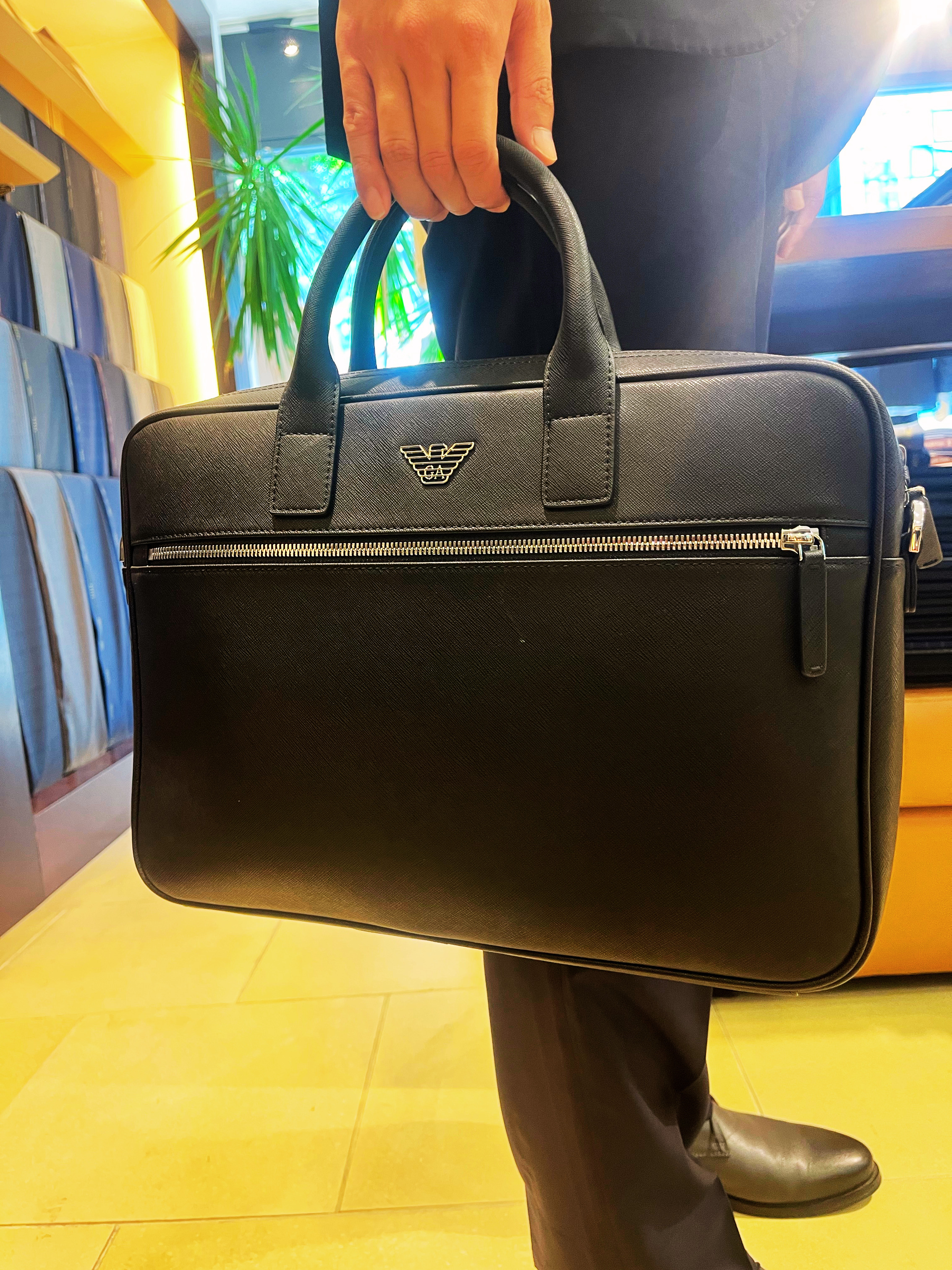
Bag — Discipline in Form
Giorgio Armani briefcase.
A structured, minimal form that reflects both functionality and discipline—
an object that quietly mirrors one’s approach to work.
What Process Reveals
At the foundation of his actions lies a consistent philosophy.
ABABA proposes a new approach: to visualize and properly evaluate the process of job hunting itself.
Not the final outcome, but the intentions and decisions that lead to it.
This perspective mirrors his own life.
Where to stand. Whom to meet. How to prepare.
By refining each step, results naturally follow.
Behind every visible achievement lies a carefully constructed process.
In an increasingly casual business culture, his decision to stand upright, to wear a suit, and to engage with others with intention can feel almost like donning armor.
And in that quiet act of preparation, his conviction becomes visible.
Good Clothing Can Change Your Life
Clothing is not meant to decorate.
It is a reflection of how deeply one has prepared and engaged with others and the environment.
Good clothing has the power to change one’s life.
But not through spectacle or attention—it is through quietly conveying the life one has already built.
Watching Kubo move forward—grounded in his values, yet steadily advancing in a global city—reminds us that while innovation is essential, so too are timeless virtues such as respect and human connection.
It is this balance that defines his strength.
And it is this path we look forward to seeing unfold.

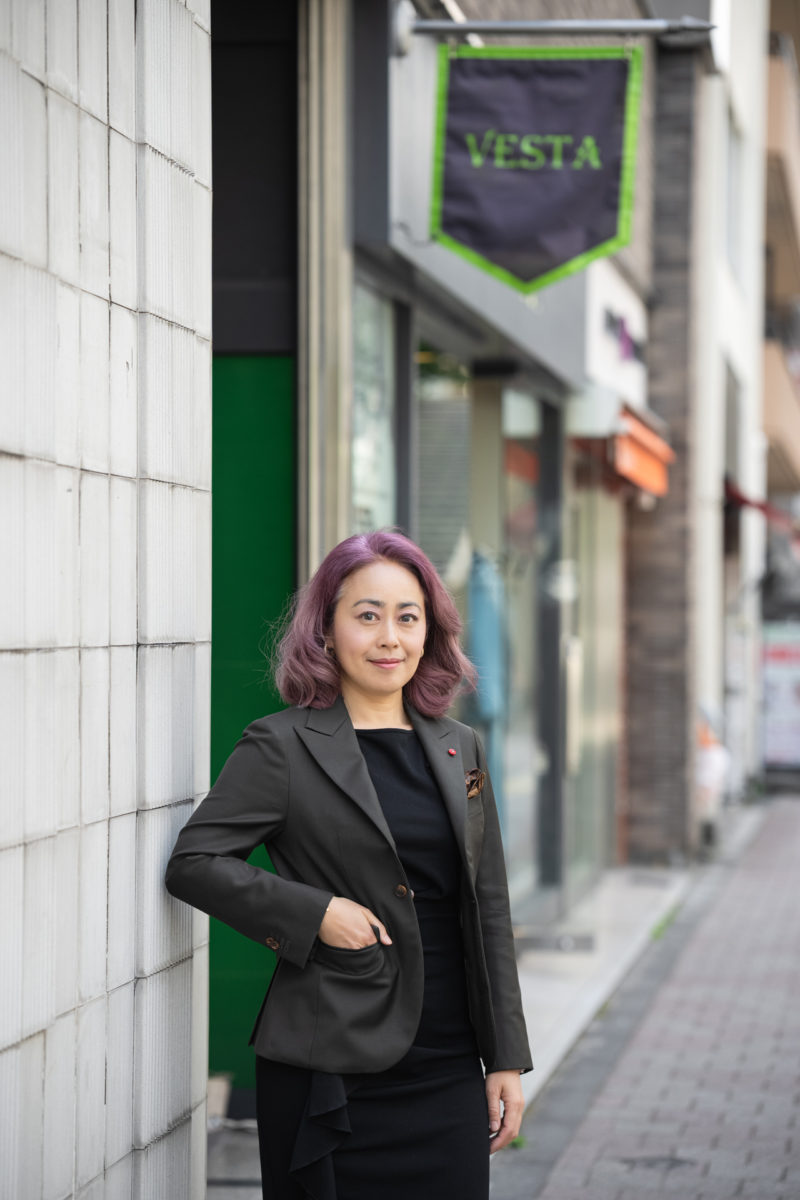
Author: Miyuki Kitagawa
General Manager of VESTA by John Ford, a bespoke tailor in Ginza, Tokyo. Native in Japanese, fluent in English, Italian, and French, she has 25 years of experience as a menswear expert. Known for her exceptional eye for quality fabrics and craftsmanship, she serves a clientele that includes top executives, politicians, and ambassadors worldwide. Even former Italian ambassadors to Japan have praised her work. She frequently contributes to fashion publications and has a deep knowledge of sartorial history. Her favorite food is fugu sashimi (tessa). https://johnford.co.jp/